
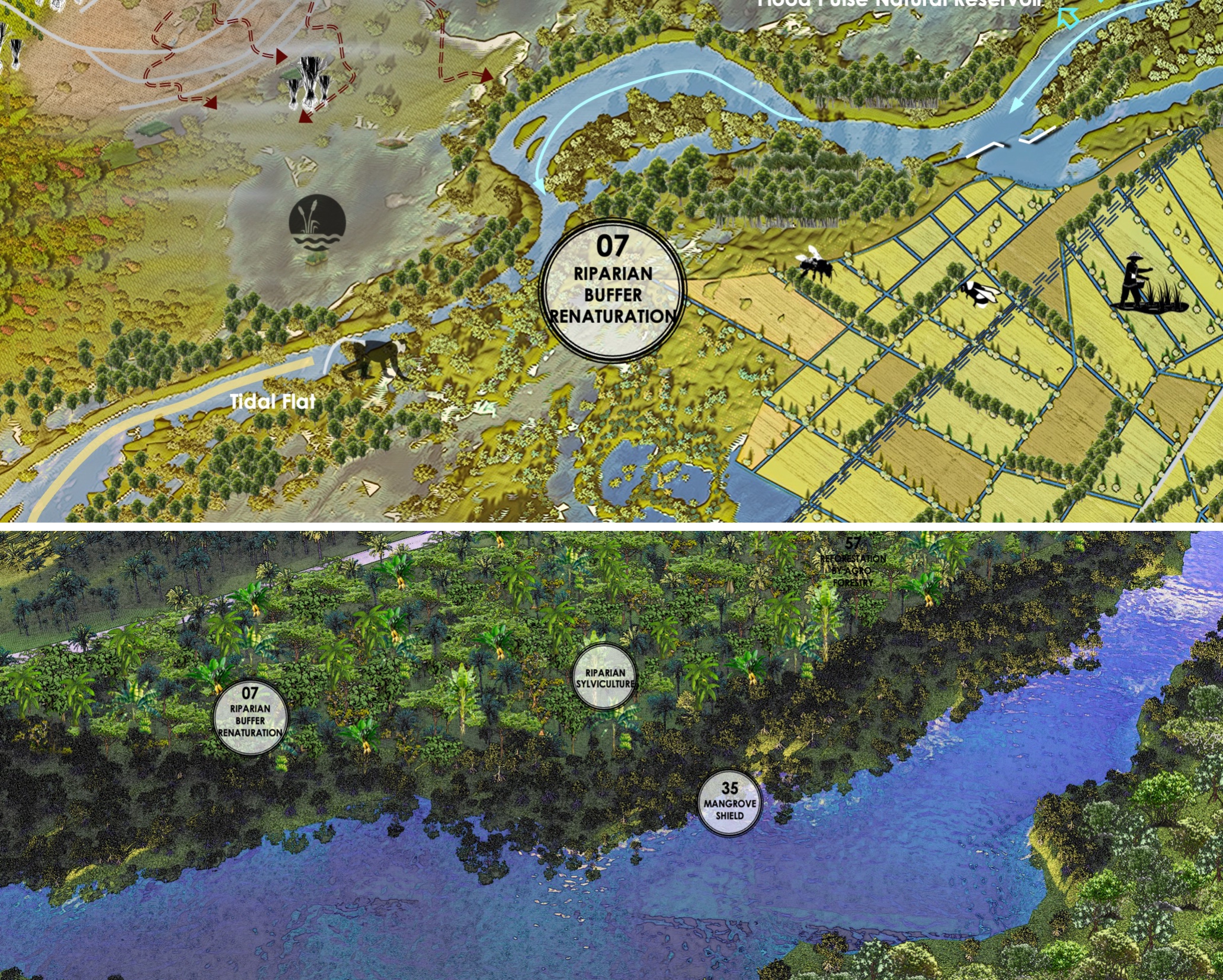
Restoring and rehabilitating natural vegetated zones along riverbanks is essential for improving ecosystem functions and protecting water quality.
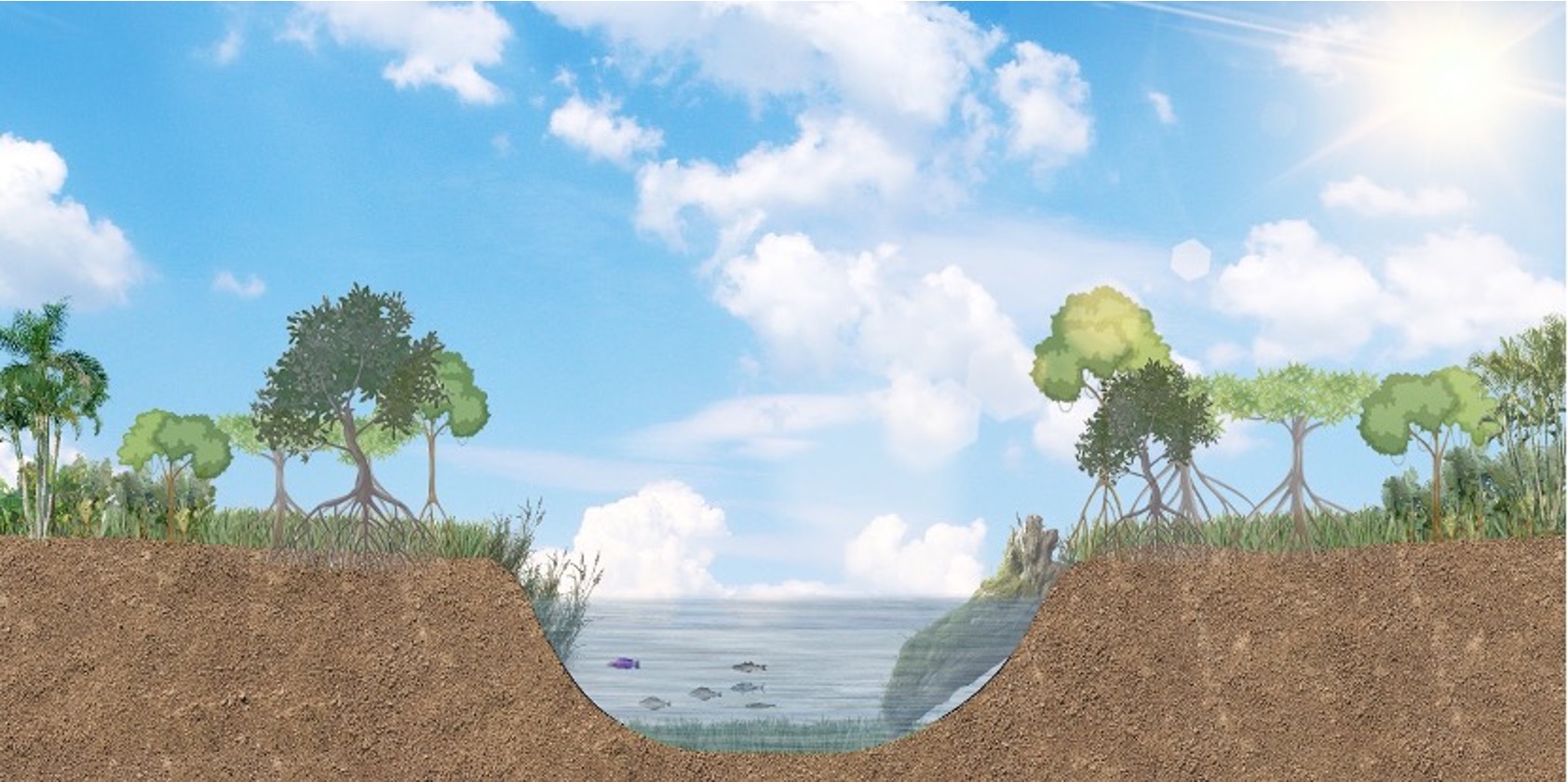
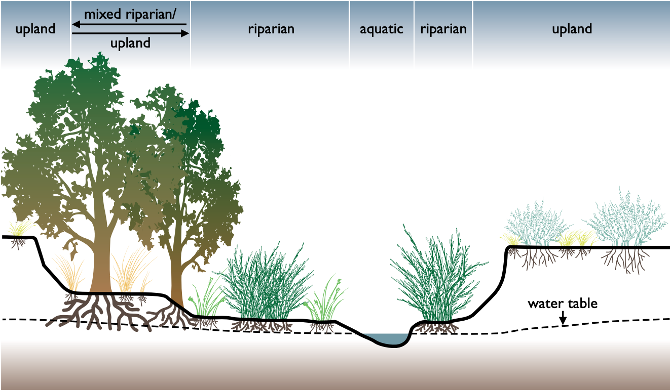
These buffers, consisting of native grasses, shrubs, and trees, act as a protective barrier between the land and the river, filtering pollutants, stabilizing soil, and controlling sedimentation. Restoration efforts focus on reintroducing native plant species, enhancing biodiversity, and reestablishing the natural dynamics of riparian ecosystems that have been impacted by human activities such as urbanization, agriculture, and deforestation.
The natural input of organic materials, such as leaf litter, branches, and other debris, which fall from the riparian zone into the river contribute to nutrient cycling, provide habitat for aquatic organisms, and help filter sediments and pollutants from the water.
By enhancing the health of riparian buffers, this approach reduces erosion, improves water quality, supports wildlife habitat, and fosters the overall health of river ecosystems.