
Sediment Capture Traps

Sediment capture traps are designed to capture and retain sediments that would otherwise be carried downstream by river currents. These traps play a crucial role in controlling sediment transport, reducing erosion, and improving water quality by preventing excessive sedimentation in downstream habitats.

They can be engineered elements such as sediment basins, weirs, or dams, or natural features like gravel bars or vegetated floodplains. These modifications slow down water flow, allowing sediments to settle and helping to retain valuable nutrients and organic matter that might otherwise be lost.

This retention improves soil fertility, supports the growth of aquatic vegetation, and enhances overall ecosystem health. By reducing suspended solids in the water, sediment capture traps help improve water clarity and quality, preventing pollution and habitat degradation. This is especially important in river systems near urban, industrial or agricultural areas, where excessive sedimentation can contribute to water quality issues and harm aquatic habitats.



  • Ecosystem based adaptation
  • Green infrastructure
  • Ecosystem restoration
  • Sustainable land management
Soil Erosion Soil Erosion
Biodiversity Loss Biodiversity Loss
Flood Control Flood Control
Carbon Sequestration Carbon Sequestration

SUPPORTING

  • Trapping systems help retain nutrients that would otherwise be lost, promoting nutrient cycling and improving soil fertility in agricultural or forested areas.
  • Protect aquatic and terrestrial habitats by reducing the smothering of critical habitats.

REGULATING

  • Stabilize the soil in areas prone to erosion by capturing sediments before they can be carried downstream.Helps maintain the capacity of river channels, preventing flooding.
  • Prevent pollutants that may be carried with the sediment from reaching water bodies.

PROVISIONING

  • Contribute to agricultural productivity by reducing soil erosion and preserving fertile soils.
  • In forest areas, prevents soil erosion, which in turn maintains forest health and contributes to the availability of timber and other forest resources.

SOCIAL BENEFITS

  • Preserving these landscapes (wetlands, rivers, floodplains) through sediment management contributes to cultural heritage.
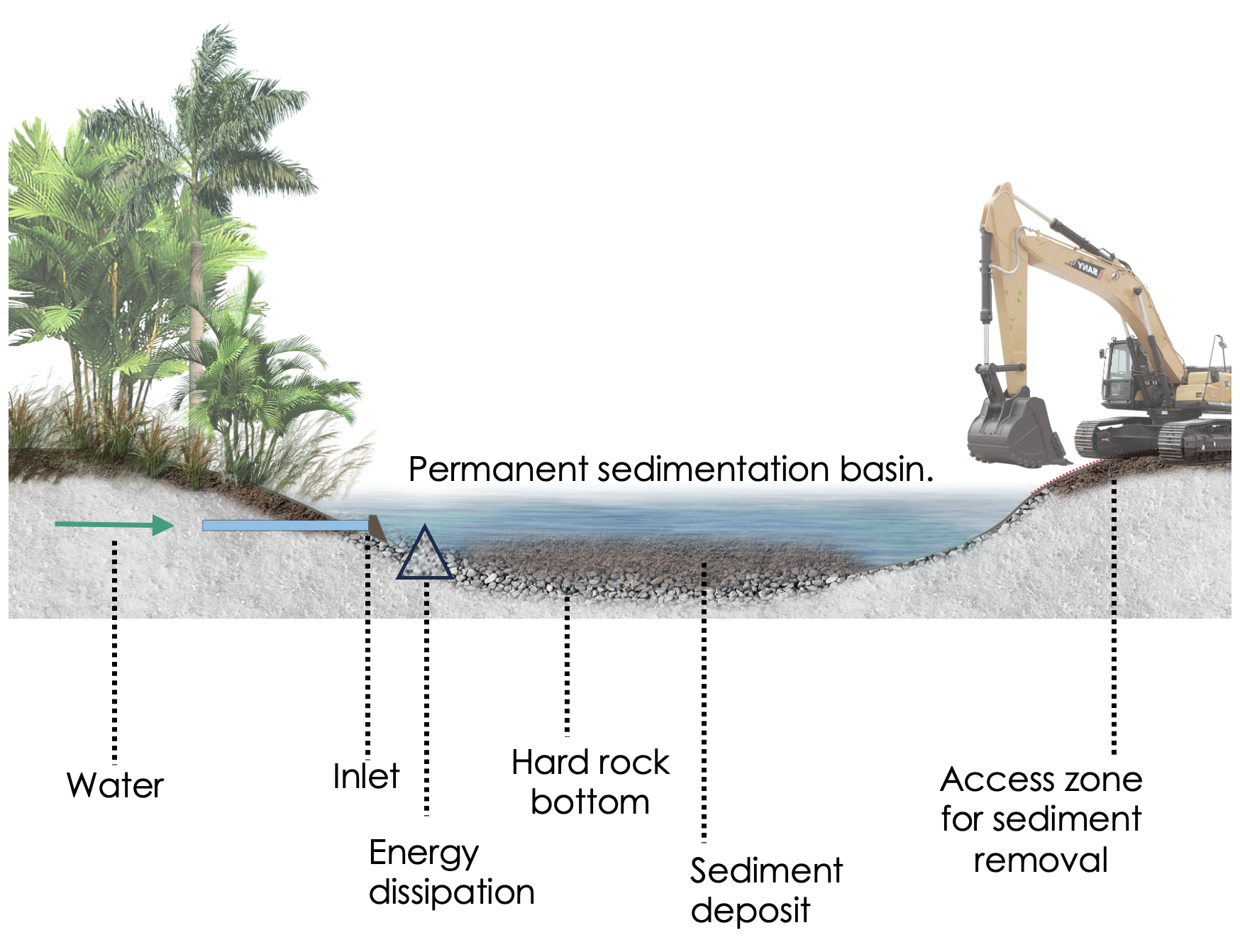
NbS6_Permanent Sedimentation Basin
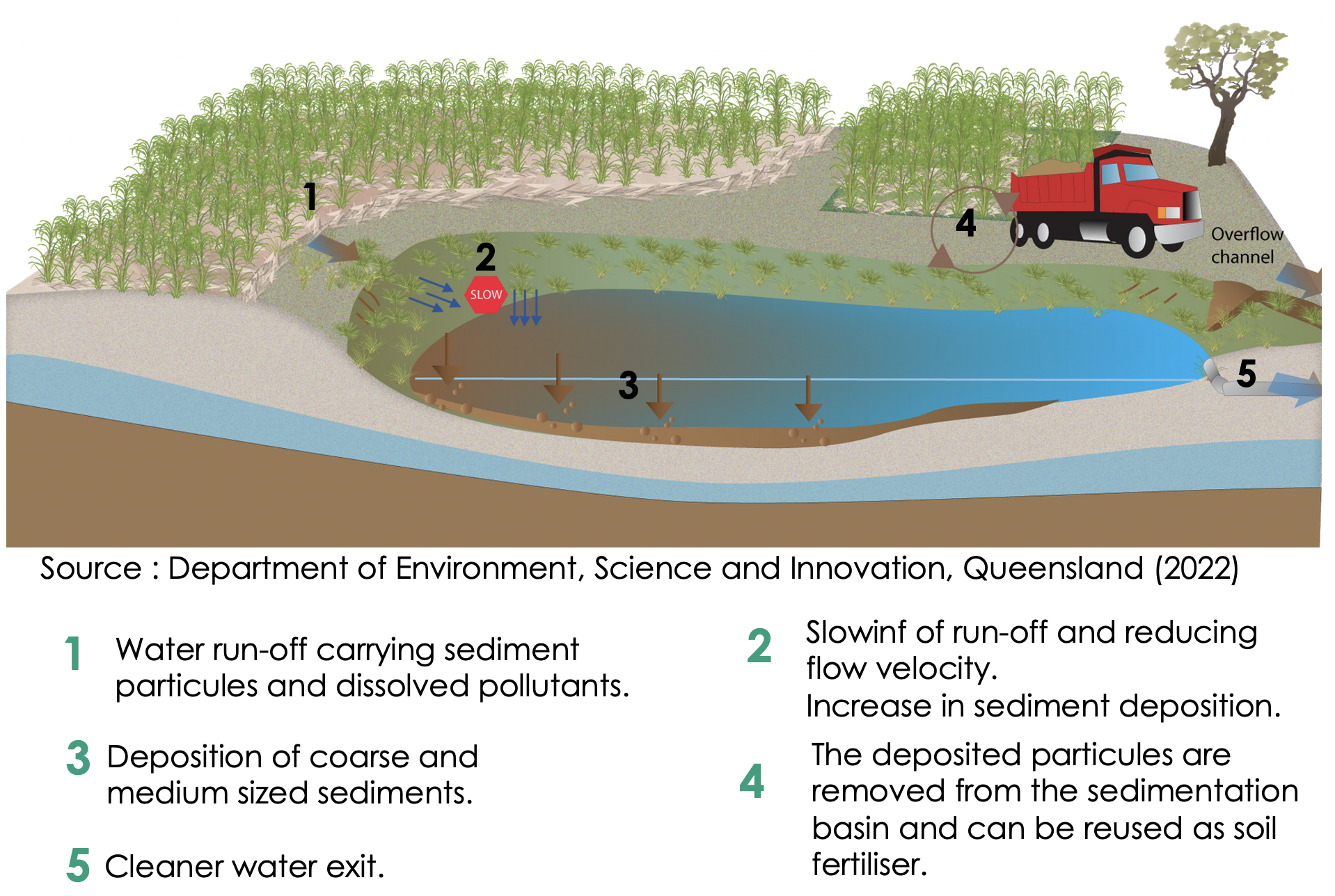
NbS6_Sediment Capture Trap_Queensland with Legends

Extreme Weather Events: Sediment traps can be overwhelmed by extreme rainfall, floods, or storms, leading to system failure.

Water Quality Issues: Accumulated sediments can become a source of pollution if they release trapped nutrients, heavy metals, or organic matter back into the water.

Land Use Conflicts: Sediment traps may require significant space, which can conflict with other land uses like agriculture, urban development, or recreation.

High Costs: Designing, building, and maintaining sediment capture systems can be expensive, especially in urban or heavily engineered environments.

Improved Water Quality

Population trends of key indicator species. Presence of migratory bird species during critical seasons.

Enhanced Soil Fertility and Agricultural Productivity

Soil organic matter content (%), crop yield increases (kg/ha), nutrient levels in retained sediment.

Carbon Sequestration

Carbon sequestration rate (tCO₂/year), vegetation cover percentage (%).

Groundwater Recharge

Groundwater table levels (m), Recharge rate (mm/year).

Flood Risk Reduction

Reduction in flood frequency (flood events/year), water retention capacity of the system (m³).

Direct Costs

Design, engineering, construction ($50,000–$500,000 + $5,000–$50,000/year maintenance).

Indirect Costs

Land Acquisition, opportunity costs : $10,000–$1M (depending on land value and mitigation needs).

Time Horizon

1–5 years for implementation, 20–50 years for operation.

Direct Benefits

Improved water quality, flood control, erosion prevention

Indirect Benefits

Improved habitats for aquatic and riparian species, carbon sequestration, recreational value, agricultural productivity

Risk Assessment

Overload, sediment starvation, habitat disruption, high maintenance costs.

REFERENCES

South Korea, Seoul, Cheonggyecheon stream (sediment traps, vegetated wetlands).

Netherlands, port of Rotterdam, Sediment traps installed to manage sediment flow and reduce dredging.


IMPLEMENTATION OPPORTUNITIES

Thailand, Bangkok, Chao Phraya River, faces significant sedimentation and water pollution.

Malaysia, Port Klang, sedimentation in its navigation channels and berths, leading to frequent dredging.