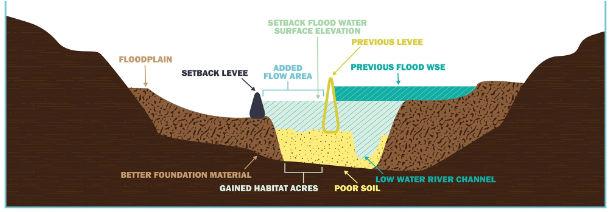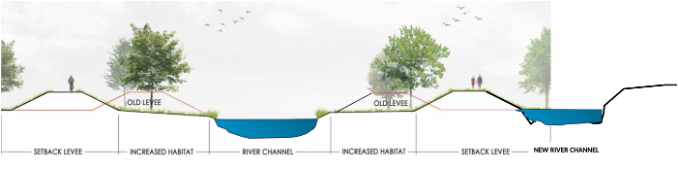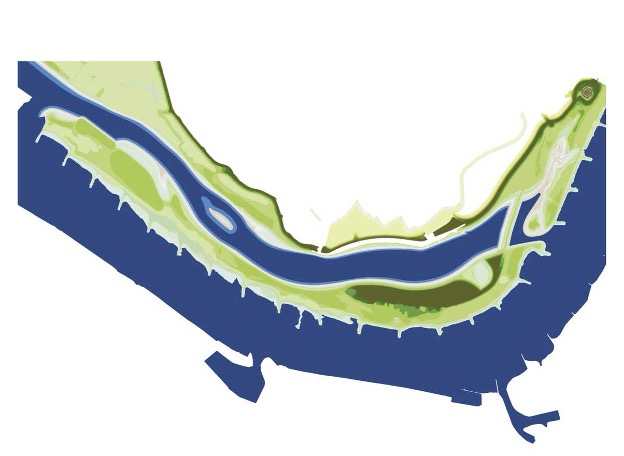

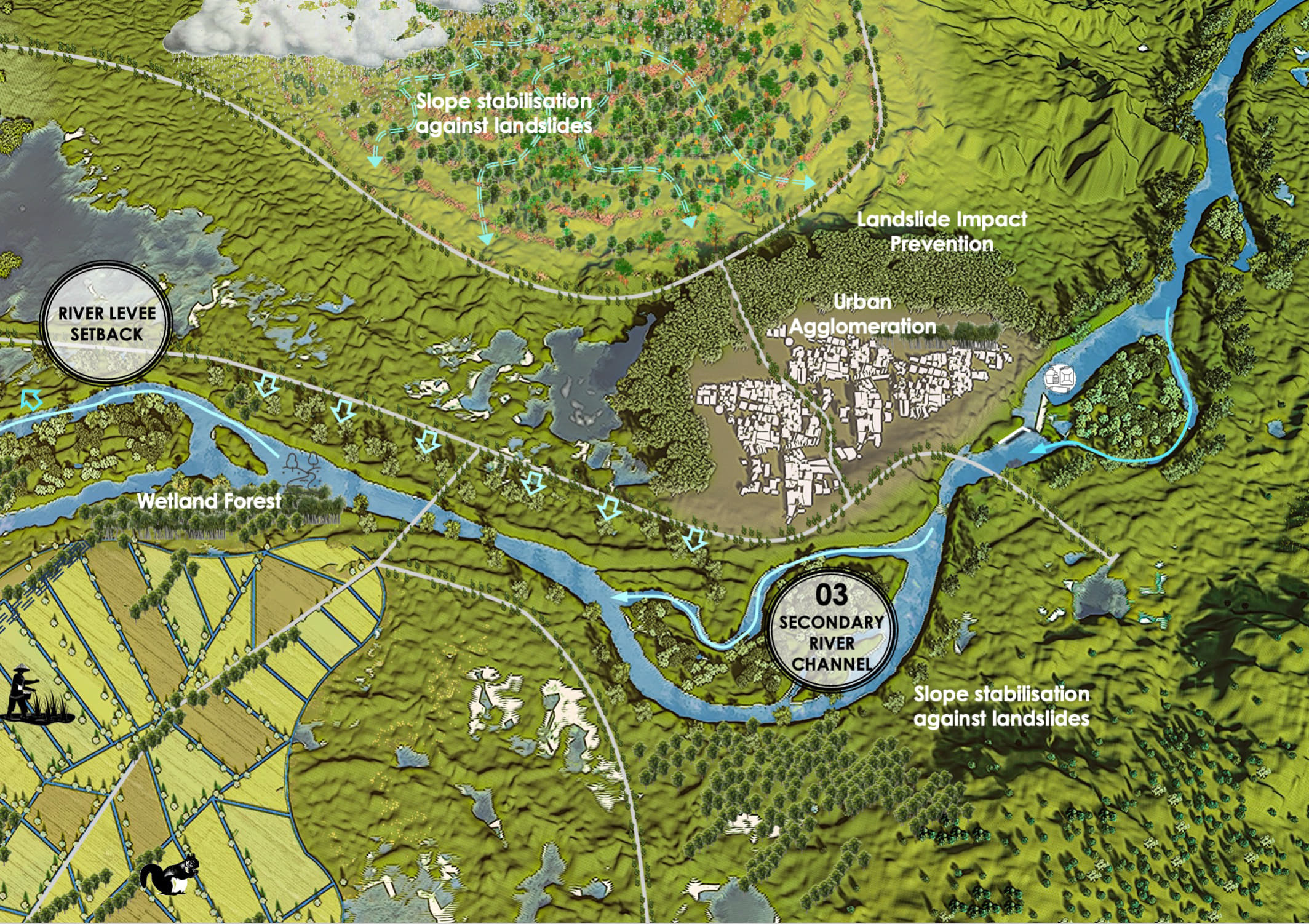
River Levee Setbacks focus on restoring natural river dynamics by relocating levees away from the river’s floodplain, creating space for the river to flood naturally during high-water events.
This process reconnects floodplains with rivers, promoting sediment deposition, nutrient cycling, and ecosystem regeneration. It includes breaching or moving levees and regrading the area to encourage natural flooding, which revitalizes the landscape by creating meanders and pools that support biodiversity.
Native flood-tolerant plants are then introduced to stabilize soils, filter water, and provide habitat for aquatic species like fish, amphibians, and invertebrates. These efforts improve water quality, mitigate flood risks, and restore vital riverine ecosystems.
Secondary river channels are natural or restored waterway branching off from a primary river, designed to mimic or enhance natural hydrological processes. These channels can reduce flood risks by diverting excess water during heavy rains, improve sediment flow to prevent siltation, and restore habitats for aquatic and riparian biodiversity. Integrating secondary river channels into regional water management strategies not only mitigates disaster risks but also promotes sustainable development and resilience for vulnerable communities.