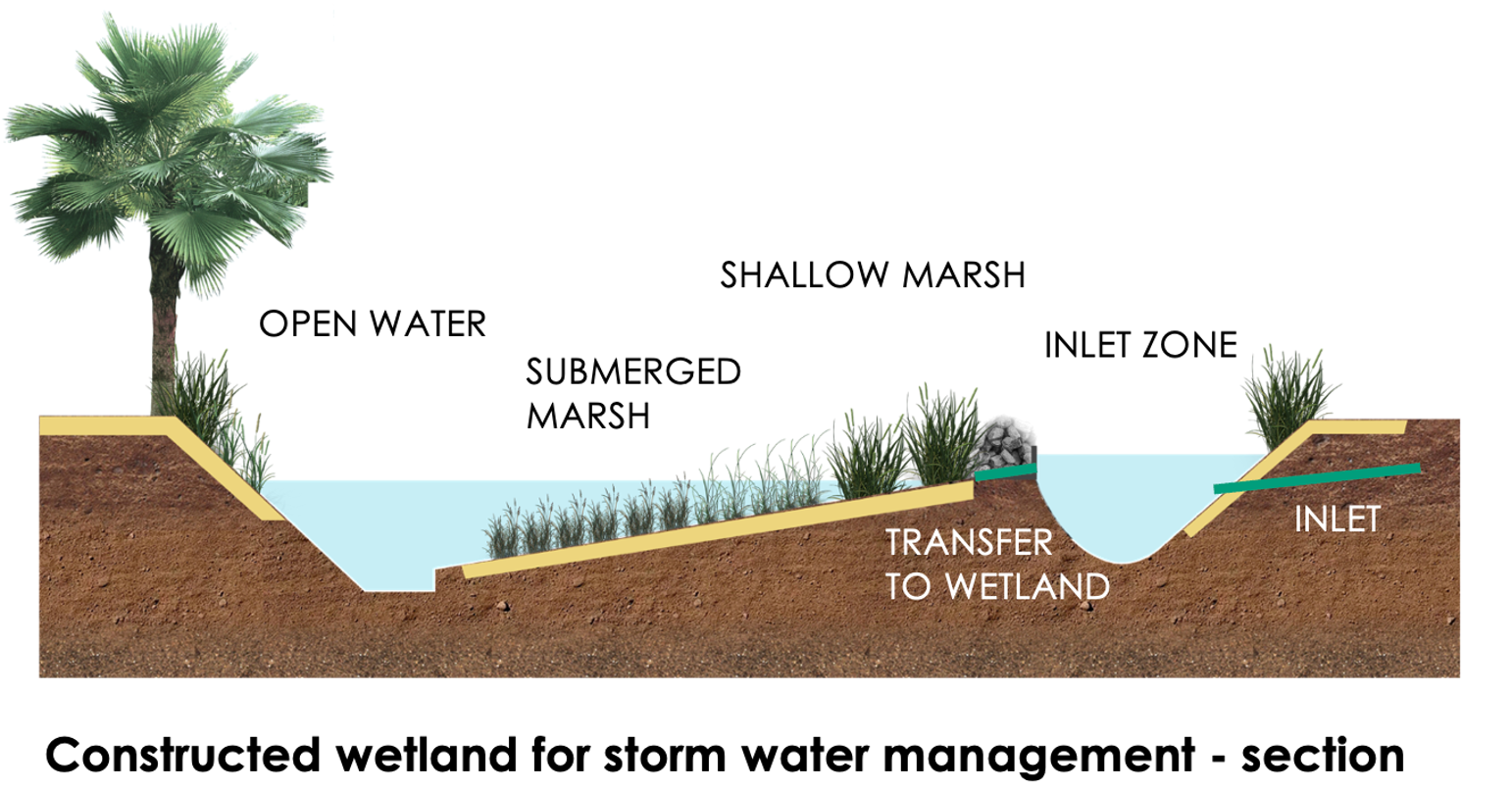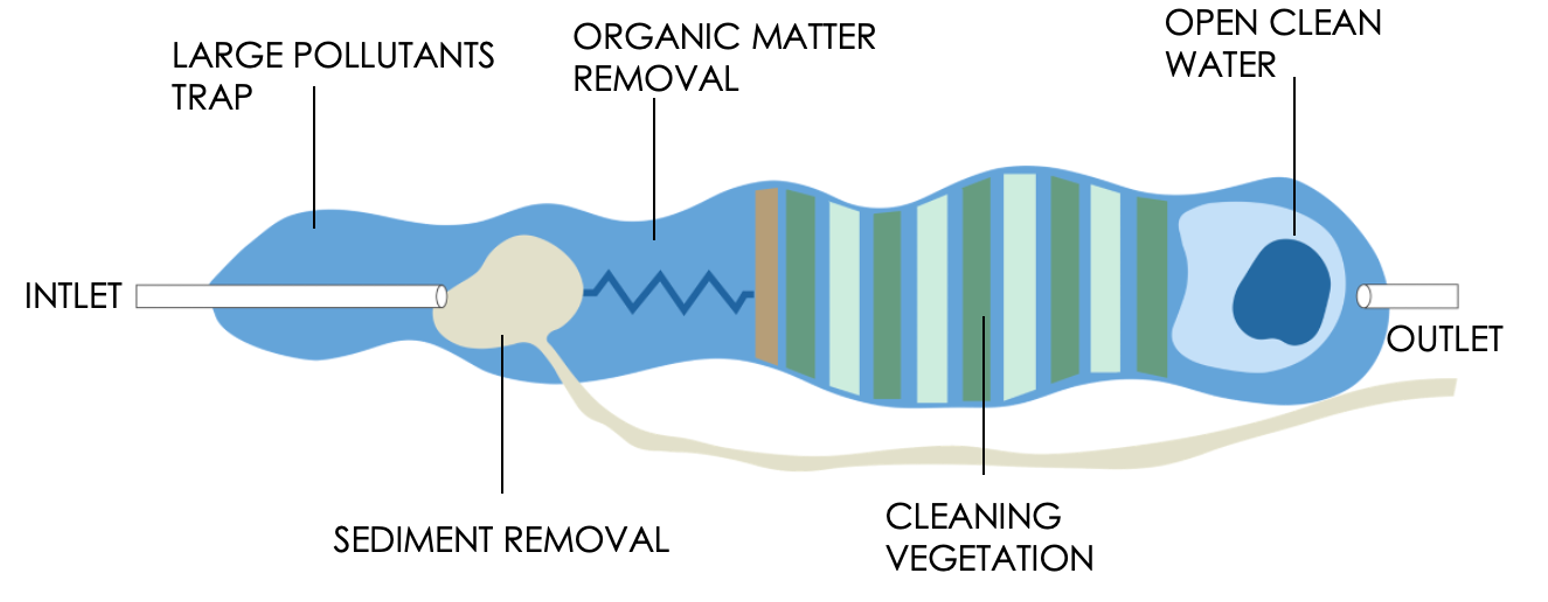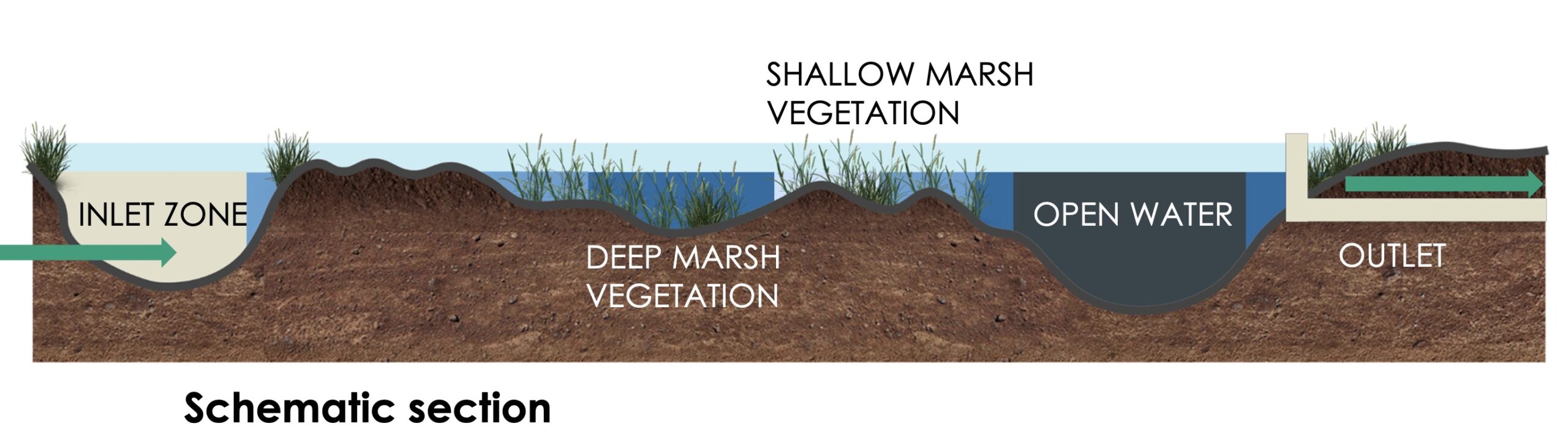

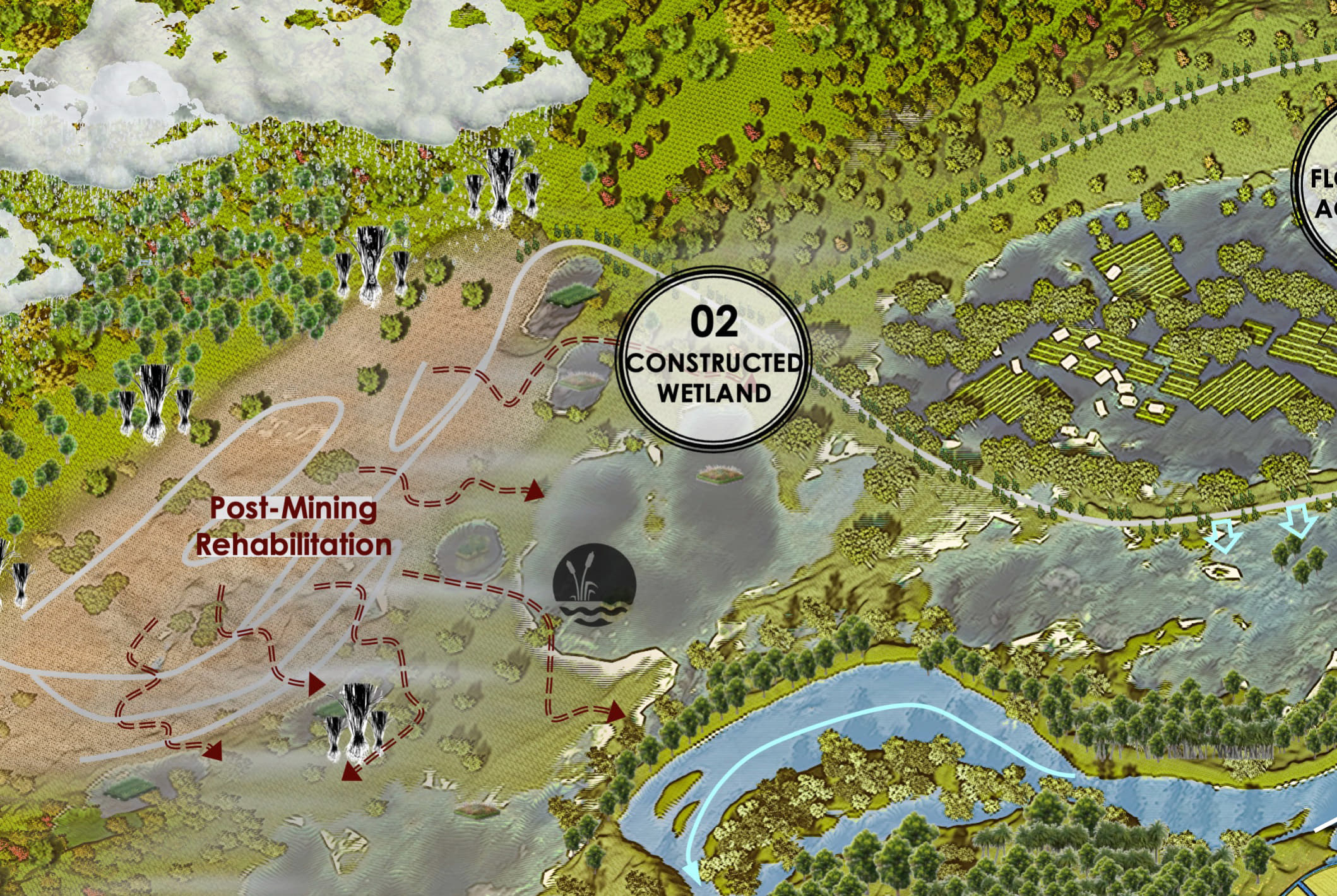
Constructed wetlands are artificial systems designed to replicate the vital ecological functions of natural wetlands. These wetlands are strategically placed along riverbanks or within floodplains to treat water, improve water quality, and enhance biodiversity. The primary focus is on managing water flow, reducing pollutants, and providing habitat for aquatic species in river systems.
It involves designing channels, shallow ponds, and marshy areas that allow for water filtration, sediment retention, and nutrient cycling. These features are integrated into the landscape to mimic the natural hydrology of riverine wetlands, helping to manage floodwaters and stabilize riverbanks. The artificial wetlands often include elements such as sedimentation zones, reed beds, and vegetated swales that improve the river’s water quality by filtering out excess nutrients, sediments, and pollutants, particularly from agricultural or urban runoff.