
Inland Natural Wetlands

Riparian wetland restoration and preservation focuses on rejuvenating critical freshwater ecosystems by reinstating their natural hydrology and vegetation. Restoration efforts often involve reconnecting floodplains to their rivers by breaching levees, removing barriers, or regrading streambanks to allow seasonal flooding. This hydrological reconnection fosters sediment deposition and nutrient exchange, rebuilding the wetland platform and creating conditions for plant growth.

Techniques such as using biodegradable materials, like coir mats or straw bales, help stabilize banks and retain sediments, while channels, pools, and meanders are reintroduced to restore the natural features of the wetland. These modifications enhance water circulation and provide diverse habitats for fish, amphibians, and aquatic invertebrates.

Native flood-tolerant vegetation, is planted to anchor soils, filter water, and provide shade and habitat.

  • Ecosystem based adaptation
  • Forest landscape restoration
  • Ecosystem based disaster risk reduction
  • Green infrastructure
Soil Erosion Soil Erosion
Biodiversity Loss Biodiversity Loss
Flood Control Flood Control
Disaster Risk Reduction Disaster Risk Reduction
Carbon Sequestration Carbon Sequestration
Food Security Food Security

SUPPORTING

  • Provide habitats for plants, animals, migratory birds, fish.
  • Recycle essential nutrients, maintain soil fertility.
  • Trap sediments during floods, stabilizing riverbanks.

REGULATING

  • Act as natural buffers by absorbing and slowing floodwaters, protecting downstream areas.
  • Allow water to percolate into aquifers, maintaining base flows during dry periods.
  • Regulate local temperatures and store carbon in wetland soils and vegetation.

PROVISIONING

  • Store and regulate freshwater for domestic, agricultural, and industrial use.
  • Support fisheries, rice cultivation, and wild edible plants.
  • Provide resources like reeds, wood, and medicinal plants.

SOCIAL BENEFITS

  • Offer opportunities for studying river dynamics, biodiversity, and wetland ecology.
  • Recreation and ecotourism, cultural heritage around rivers
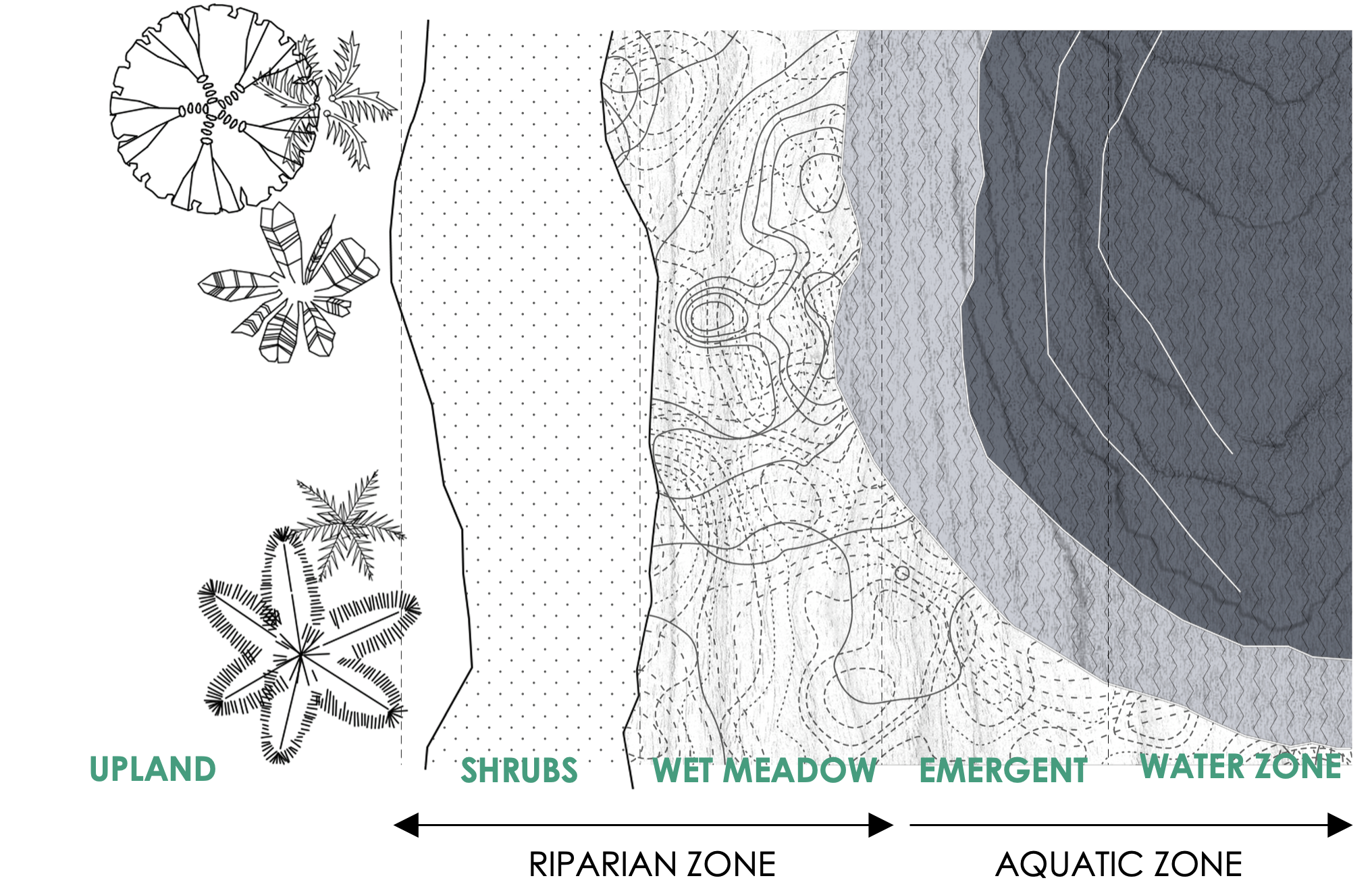
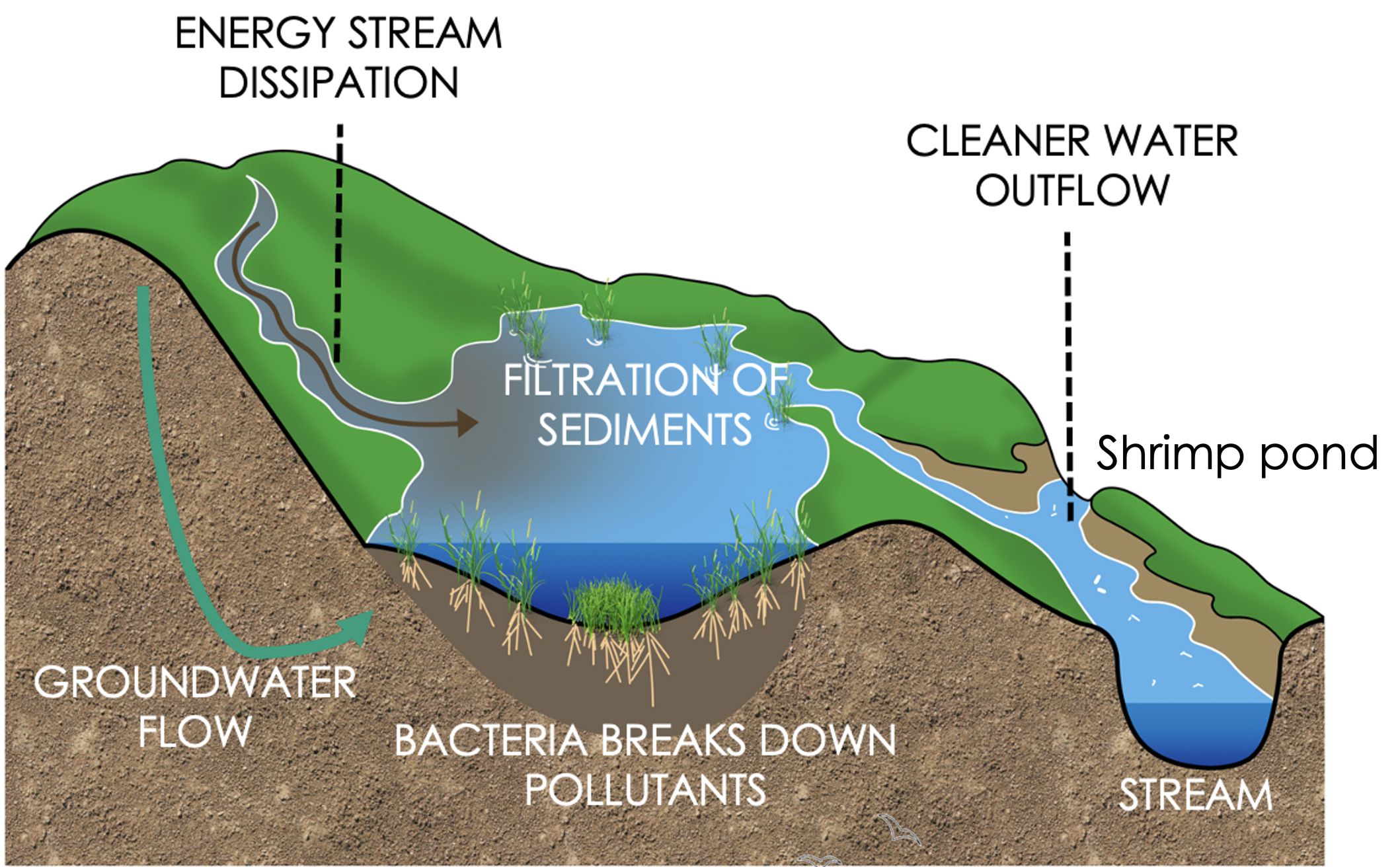
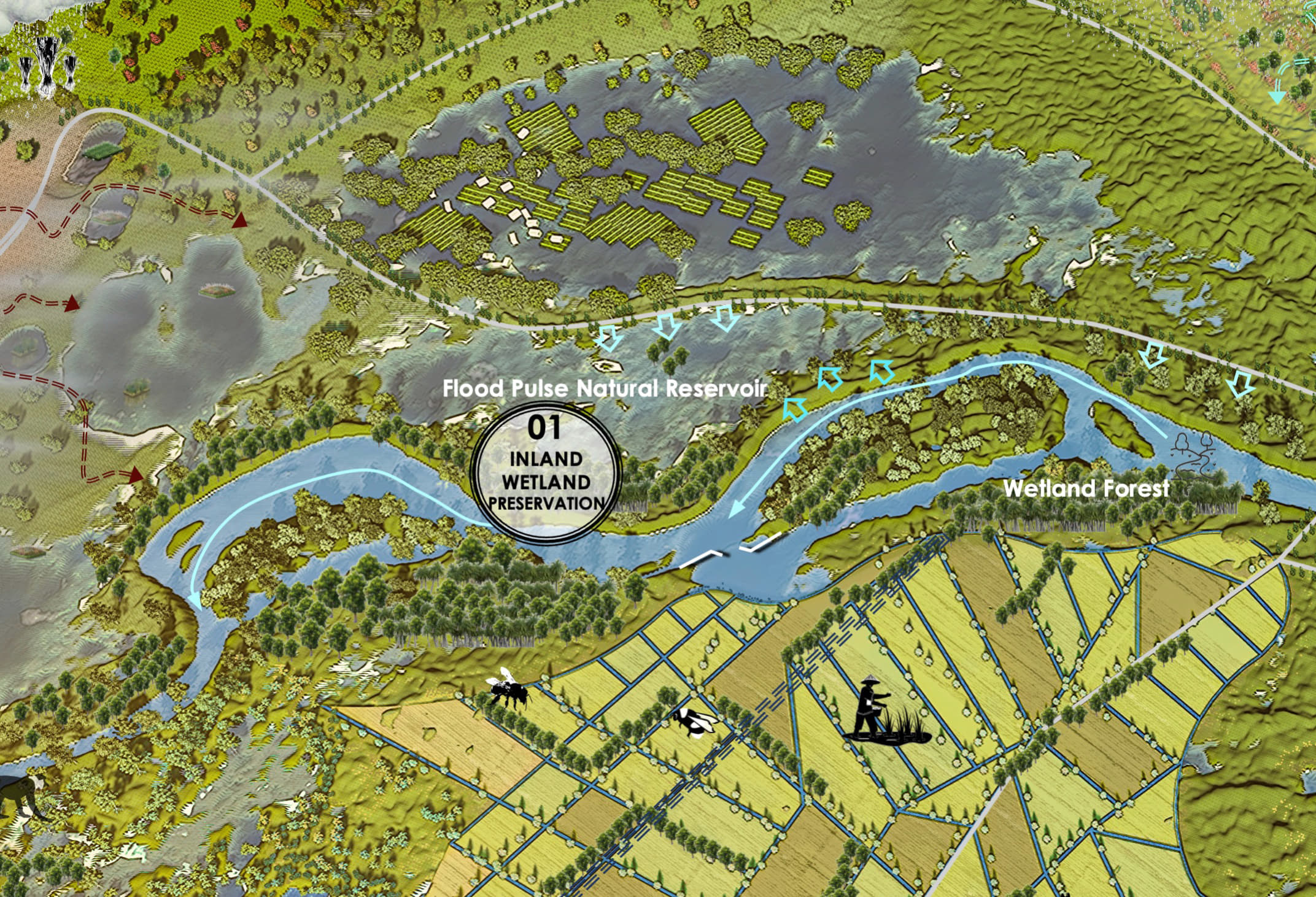
NbS1 Inland Natural Wetland along river
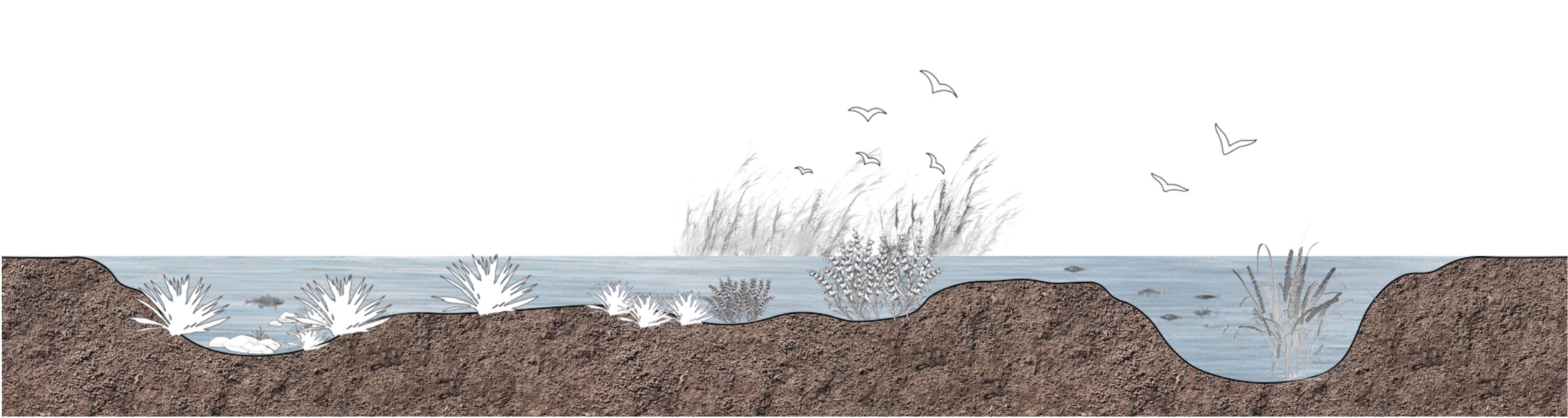
NbS1 Inland Wetland Section Inspired by Uni Edimburgh
NbS1 Natural Wetland Section

Pollution: Agricultural runoff, industrial waste, and untreated sewage contaminate wetlands, harming biodiversity and reducing water quality.

Sea level rise: Coastal wetlands, including mangroves, are at risk of submersion due to rising sea levels.

Governance challenges: Competing demands for agriculture, urban development, and water resources lead to wetland degradation.

Natural Subsidence: Wetland areas can naturally subside over time, compounded by human activities like groundwater extraction.

Enhanced Biodiversity Conservation

Population trends of key indicator species. Presence of migratory bird species during critical seasons.

Improved Water Quality

Levels of pollutants (e.g., nitrogen, phosphorus) in wetland and downstream water, sediment load reduction in river systems.

Flood Risk Reduction

Reduction in flood peak levels during heavy rains. Number of downstream communities protected from flooding.

Increased Food Security

Area of agricultural land supported by wetland irrigation. Annual fish catch or wild food harvest.

Reduced Disaster Recovery Costs

Estimated savings from reduced flood damages.

Direct Costs

Restoration, monitoring, infrastructure. $5,000–$30,000 per hectare restoration cost

Indirect Costs

Loss of income from alternative land uses (e.g., agriculture or development).

Time Horizon

Initial establishment and functional optimization (3–10 years).
Full operational lifespan (10–50 years or more)

Direct Benefits

Flood risk reduction, water quality improvement, resource harvesting.

Indirect Benefits

Policy and Regulatory Costs (Enforcement of wetland protection laws), capacity building and education.

Risk Assessment

Sea level rise, urbanization, funding gaps for long-term management and the reliability of revenue.

REFERENCES

Cambodia, Tonle Sap Lake and Floodplain Wetlands.

Australia, Barmah-Millewa Forest (riverine wetlands).

UK, Tophill Low Nature Reserve, small wetlands fed by the River Hull in East Yorkshire.


IMPLEMENTATION OPPORTUNITIES

Vietnam, Mekong Delta Wetlands, particularly in the Plain of Reeds and U Minh wetlands.

Indonesia, preserve and restore wetlands in the Mahakam River Basin in Kalimantan.