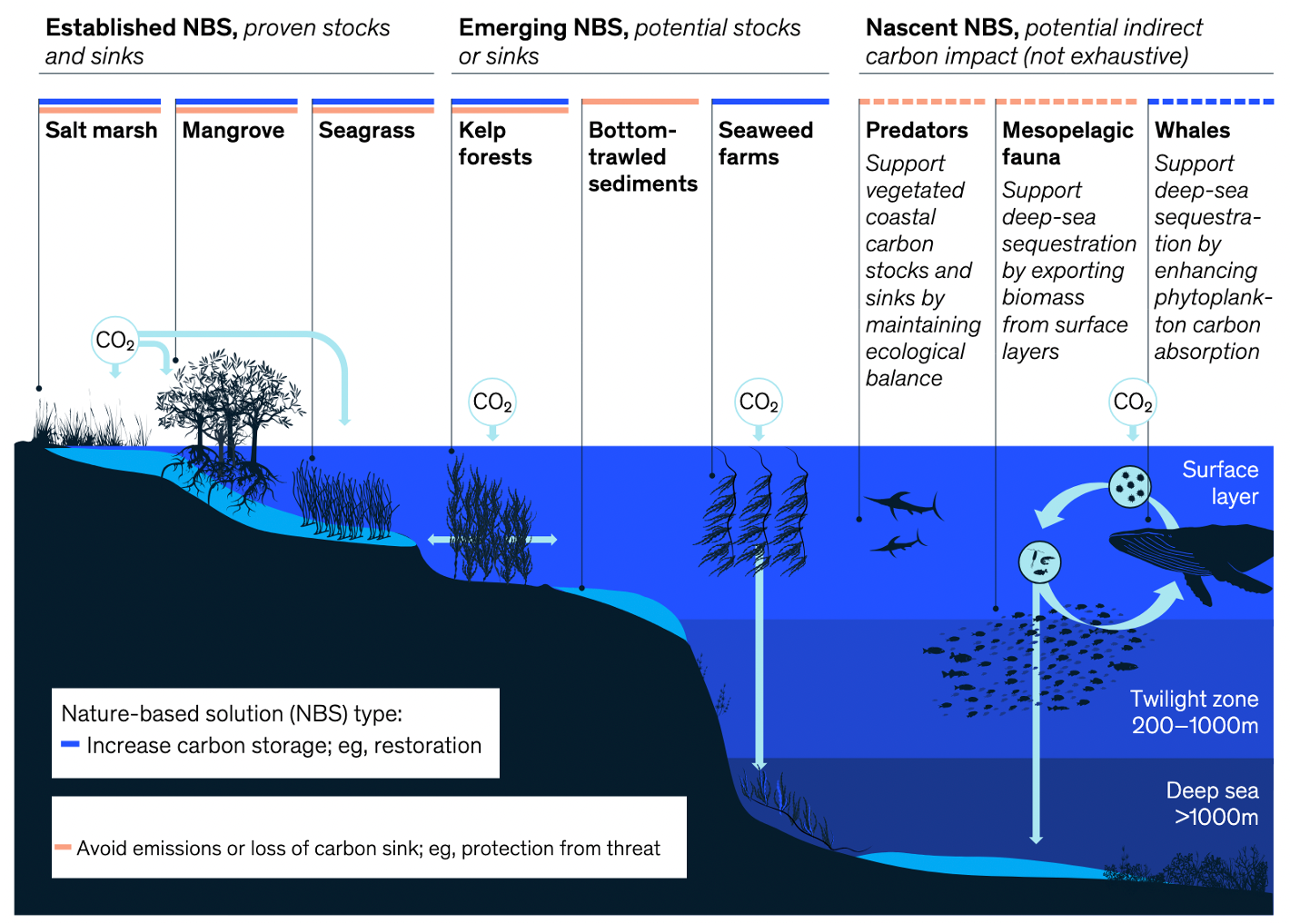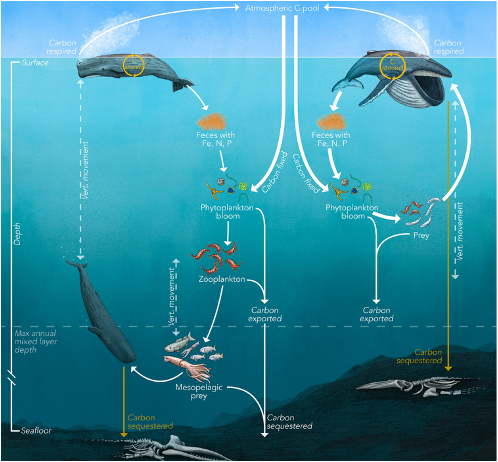

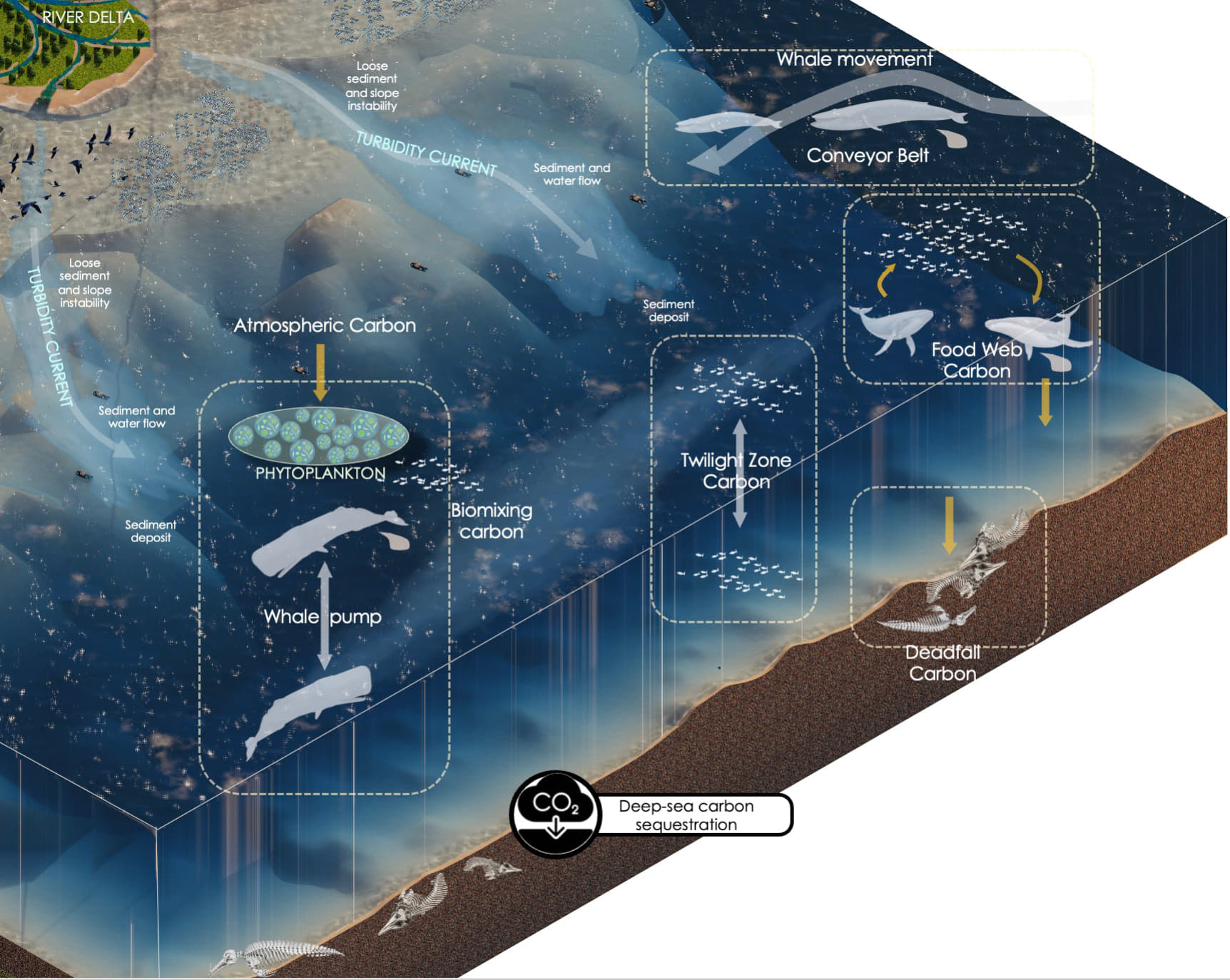
Deep-sea sequestration of mesopelagic fauna presents an emerging NbS for marine ecosystems, by leveraging natural processes to enhance carbon capture and ecosystem resilience. It involves six key actions:
Enhancing the Biological Pump, which strengthens the ocean’s ability to transport carbon to the deep-sea via the food web; Promoting Bioluminescent Behaviour, where mesopelagic organisms contribute to light-driven carbon cycling; Sustainable Management of Fisheries, ensuring mesopelagic species thrive without overfishing, thus maintaining their role in carbon sequestration; Artificial Upwelling Systems, which stimulate phytoplankton growth, supporting the food chain and increasing carbon storage; Marine Protected Areas (MPAs) and Conservation, creating sanctuaries to protect mesopelagic habitats and enhance biodiversity; and Monitoring and Research of Deep-sea Ecosystems, to understand carbon cycling and the ecological value of these species.
In Southeast Asia, it can boost regenerative seascapes by stabilizing marine ecosystems, fostering biodiversity, and reducing sedimentation rates. It also contributes to climate change mitigation by enhancing carbon storage in deep-sea sediments. Technically, the integration of deep-sea sequestration with sustainable fisheries and MPAs will support the region’s coastal economies, while research and monitoring can refine conservation practices. These approaches not only offer long-term environmental and climate benefits but also enhance the social and economic resilience of coastal communities dependent on healthy marine ecosystems.